Table of Contents
- Knowledge Base
- Cleanroom Disinfectants
- How Does Chlorine Disinfection Support Pharmaceutical Cleanroom Contamination Control?
 Contec Cleanroom
 Life Sciences, Disinfectants, Article
How Does Chlorine Disinfection Support Pharmaceutical Cleanroom Contamination Control?
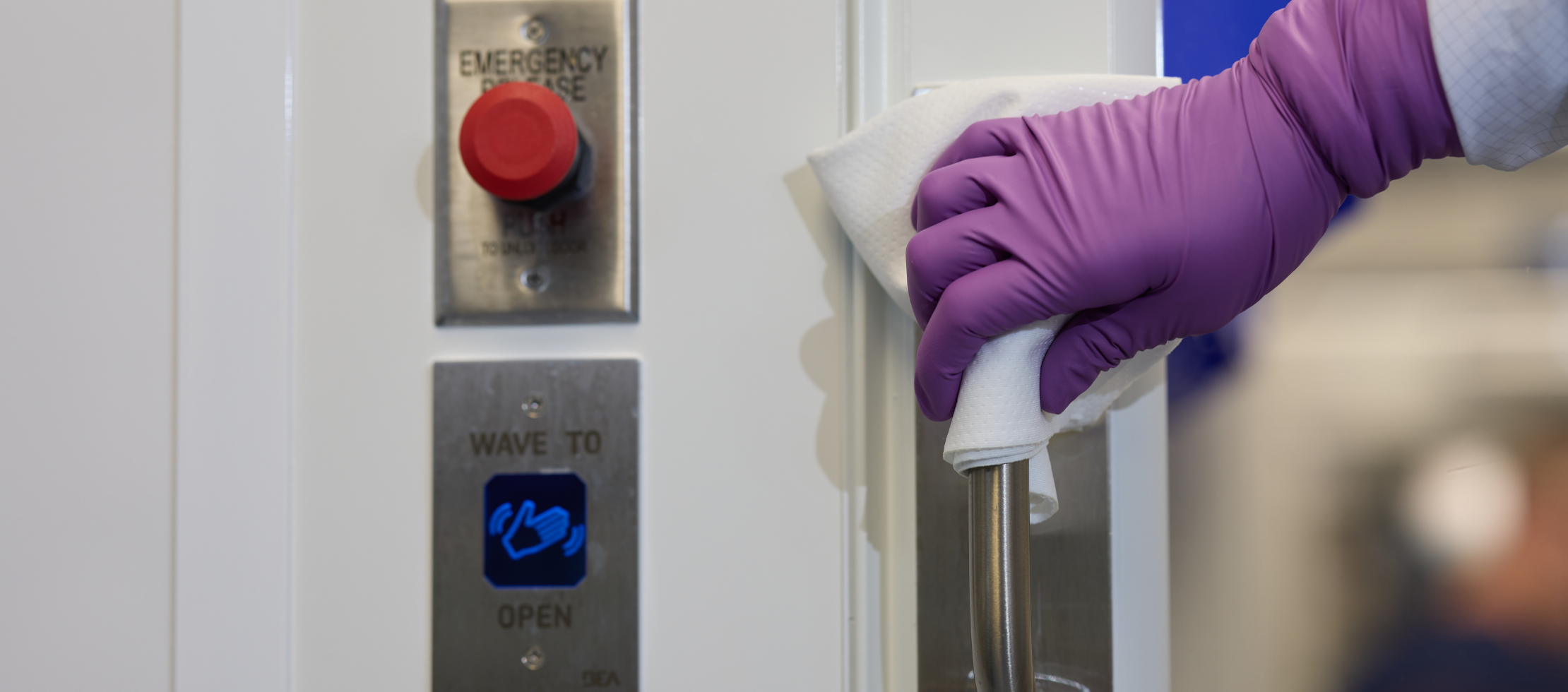
Chlorine disinfectants are widely used in pharmaceutical and controlled environments because of their broad-spectrum antimicrobial activity and strong sporicidal performance. Chlorine-based disinfectants can be highly effective against bacteria, viruses, fungi, and spores, but facilities must carefully manage factors such as concentration, residue formation, material compatibility, stability, and operator safety to ensure effective cleanroom contamination control.
Why Are Chlorine Disinfectants Used in Cleanrooms?
Chlorine disinfectants are commonly used in pharmaceutical cleanrooms because they provide broad-spectrum antimicrobial activity.
Chlorine-based products are valued for their ability to control:
-
Bacteria
-
Fungi
-
Viruses
-
Bacterial spores
These disinfectants are often incorporated into disinfectant rotation programs and may be used where sporicidal activity is required.
How Do Chlorine Disinfectants Work?
Chlorine disinfectants act through oxidative mechanisms that damage microbial cells and essential cellular components.
Chlorine-based chemistries disrupt:
-
Cellular proteins
-
Enzyme systems
-
Membrane structures
-
Genetic material
This broad mode of action contributes to the wide antimicrobial effectiveness associated with chlorine disinfectants.
What Microorganisms Are Chlorine Disinfectants Effective Against?
Chlorine disinfectants are effective against a broad range of microorganisms.
These include:
-
Gram-positive bacteria
-
Gram-negative bacteria
-
Fungi
-
Viruses
-
Bacterial spores
Chlorine-based products are particularly important in situations where high-level microbial reduction is required.
Why Are Chlorine Disinfectants Considered Sporicidal?
Bacterial spores are among the most resistant forms of microbial contamination encountered in pharmaceutical environments.
Chlorine disinfectants are considered sporicidal because they can effectively inactivate bacterial spores under appropriate conditions.
Sporicidal activity is important because spores may:
-
Survive harsh environmental conditions
-
Resist some standard disinfectants
-
Persist on cleanroom surfaces
Sporicidal disinfectants are often included as part of periodic contamination control procedures.
What Factors Influence Chlorine Disinfectant Efficacy?
Several variables influence chlorine disinfectant performance:
-
Concentration
-
Contact time
-
Organic contamination
-
pH
-
Temperature
-
Surface conditions
Organic matter may reduce chlorine effectiveness and that correct preparation and application are important for reliable microbial control.
What Residue Concerns Are Associated With Chlorine Disinfectants
Residue formation is an important consideration when using chlorine-based disinfectants in cleanrooms.
Chlorine products may leave:
-
Visible residues
-
Salt deposits
-
Surface films
Residue accumulation may affect:
-
Surface appearance
-
Equipment performance
-
Cleaning procedures
-
Material integrity
Facilities should implement appropriate residue management and cleaning procedures following chlorine disinfectant use.
How Does Chlorine Affect Cleanroom Surfaces and Materials?
Material compatibility is an important factor when using chlorine disinfectants.
Chlorine products may affect:
-
Stainless steel
-
Plastics
-
Coatings
-
Elastomers
-
Sensitive equipment surfaces
Repeated exposure or improper use may contribute to corrosion or material degradation.
Facilities should therefore assess compatibility between disinfectants and cleanroom materials before implementation.
What Safety Considerations Apply to Chlorine Disinfectants?
There are several safety considerations associated with chlorine chemistry.
Important factors include:
-
Operator exposure
-
Ventilation requirements
-
Chemical handling procedures
-
Dilution accuracy
-
Storage conditions
Chlorine products should be prepared and used according to manufacturer instructions and site safety procedures.
Why Is Disinfectant Preparation and Stability Important?
Chlorine disinfectant stability may affect efficacy performance.
Factors influencing stability include:
-
Storage conditions
Exposure to light
Temperature
Product age
Dilution practices
Improper preparation or storage may reduce available chlorine concentration and compromise disinfectant effectiveness.
How Should Chlorine Disinfectants Be Integrated into Contamination Control Programs?
The article explains that chlorine disinfectants should form part of a broader contamination control strategy.
Facilities may use chlorine products for:
-
Periodic sporicidal disinfection
-
High-risk contamination events
-
Targeted microbial control procedures
-
Disinfectant rotation programs
Disinfectant selection should consider efficacy, compatibility, residue management, safety, and operational requirements.
Conclusion
Chlorine disinfectants provide broad-spectrum and sporicidal activity that supports pharmaceutical cleanroom contamination control programs. Effective use requires careful management of concentration, contact time, residue control, material compatibility, and safety procedures to ensure reliable microbial reduction and cleanroom compliance.
Key Takeaways
- Chlorine disinfectants provide broad-spectrum antimicrobial and sporicidal activity.
- Chlorine products are effective against bacteria, fungi, viruses, and bacterial spores.
- Residue management and material compatibility are important considerations when using chlorine disinfectants.
- Organic contamination and improper preparation may reduce disinfectant efficacy.
- Chlorine disinfectants should be integrated into validated contamination control programs.
 return to overview
 back to top