Table of Contents
- Knowledge Base
- Cleaning and Disinfection
- How Do Wipes and Disinfectants Work Together in Cleanroom Contamination Control?
 Contec Cleanroom
 Life Sciences, Contamination Control, Disinfectants, Wiping, Article
How Do Wipes and Disinfectants Work Together in Cleanroom Contamination Control?
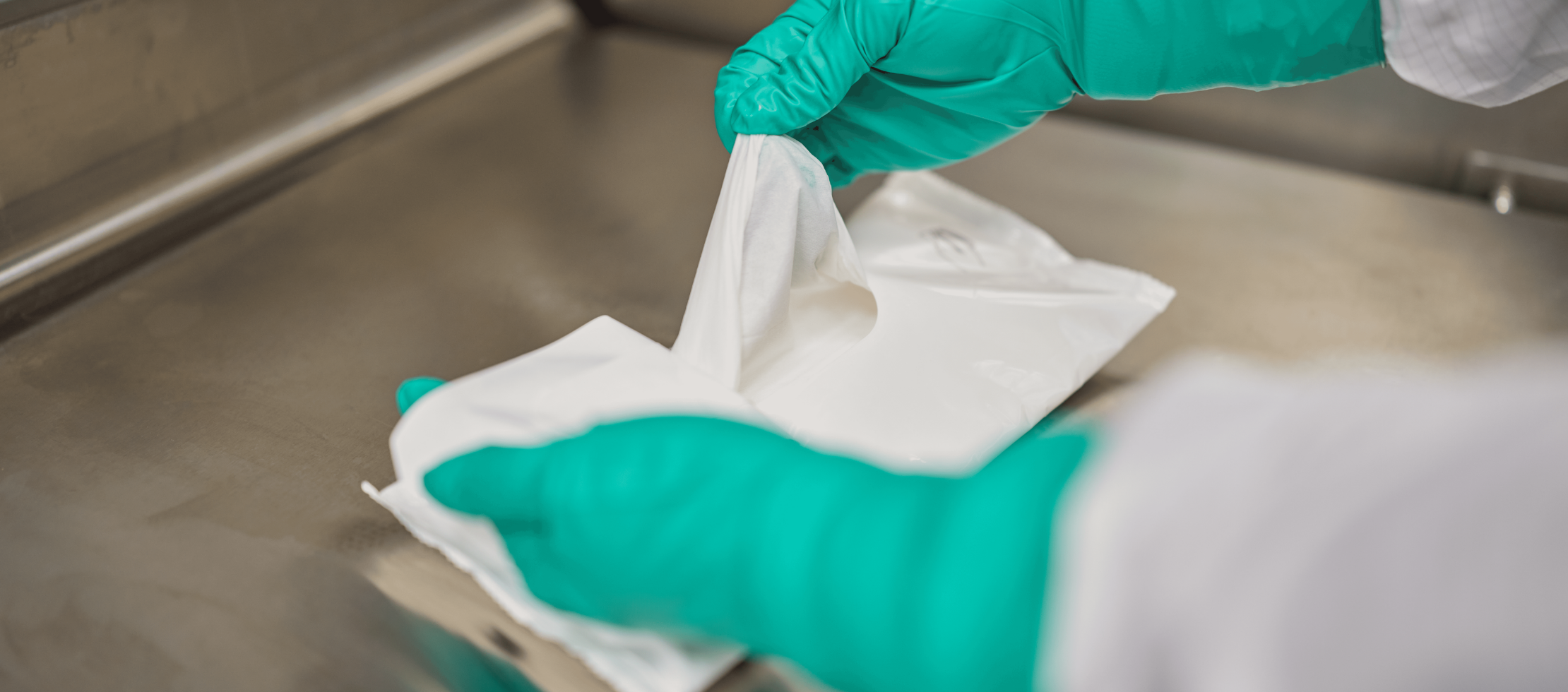
Wipes and disinfectants are closely linked components of pharmaceutical cleanroom contamination control programs. The article explains that effective cleaning and disinfection depend not only on the disinfectant chemistry but also on the wipe material, wiping technique, surface compatibility, and application method. Proper wipe and disinfectant selection helps improve contamination removal, disinfectant distribution, and overall cleanroom cleaning performance.
Why Are Wipes and Disinfectants Important in Cleanrooms?
Wipes and disinfectants are essential tools for maintaining contamination control within pharmaceutical and controlled environments.
Together, wipes and disinfectants support:
-
Surface cleaning
-
Microbial control
-
Residue removal
-
Particle reduction
-
Disinfectant application
Effective contamination control requires both appropriate disinfectant chemistry and suitable wipe materials.
How Do Wipes Contribute to Contamination Control?
Wipes provide the mechanical action needed to physically remove contamination from surfaces.
Wipes help remove:
-
Particles
-
Surface residues
-
Microbial contamination
-
Process soils
Mechanical wiping action may improve overall cleaning effectiveness by lifting and transferring contamination away from critical surfaces. Wiping technique and wipe construction significantly influence cleaning performance.
What Role Do Disinfectants Play During Cleanroom Cleaning?
Disinfectants provide chemical microbial reduction as part of cleanroom cleaning procedures.
Disinfectants help control:
-
Bacteria
-
Fungi
-
Viruses
-
Spores depending on formulation
Disinfectants must be distributed evenly across surfaces and maintained for appropriate contact times to achieve effective microbial control.
Why Does Wipe Material Matter When Using Disinfectants?
Wipe materials directly affect disinfectant application and cleaning effectiveness.
Important wipe characteristics include:
-
Absorbency
-
Sorptive capacity
-
Liquid release properties
-
Particle generation
-
Chemical compatibility
Different wipe materials may absorb, retain, or release disinfectants differently, affecting how much disinfectant reaches the surface. Excessive liquid retention within the wipe may reduce disinfectant availability on the surface being cleaned
How Does Disinfectant Application Affect Cleaning Performance?
Proper disinfectant application is essential for effective cleaning and microbial control.
Application performance depends on:
-
Surface wetting
-
Coverage consistency
-
Contact time
-
Wipe saturation
-
Application technique
Insufficient disinfectant delivery or uneven surface coverage may reduce efficacy and contamination control performance.
What Factors Influence Wipe and Disinfectant Compatibility?
Compatibility between wipes and disinfectants is important to ensure reliable cleanroom cleaning performance.
Incompatible combinations of wipes and disinfectants can result in:
-
Reduced disinfectant efficacy
-
Wipe degradation
-
Increased particle release
-
Poor liquid delivery
-
Residue formation
Facilities should evaluate wipe and disinfectant systems together rather than independently.
Why Is Mechanical Wiping Action Important?
Mechanical wiping action contributes significantly to contamination removal.
Wiping helps:
-
Lift contamination from surfaces
-
Spread disinfectant evenly
-
Remove residues
-
Improve cleaning efficiency
Disinfectant chemistry alone may not achieve effective surface cleaning without proper wiping technique.
How Can Wipes Affect Disinfectant Efficacy?
Wipe materials may influence disinfectant performance by affecting liquid transfer and contact time.
Factors affecting efficacy include:
-
Disinfectant absorption into the wipe
-
Controlled liquid release
-
Surface wetting behavior
-
Drying rates
A wipe that retains too much disinfectant may reduce the amount available on the target surface. It is always important to evaluate wipes and disinfectants as a combined system.
What Residue Considerations Apply to Wipes and Disinfectants?
Residue management is an important aspect of cleanroom cleaning programs.
Residues can originate from:
-
Disinfectant chemistry
-
Wipe materials
-
Surface interactions
Residues may affect:
-
Surface appearance
-
Equipment operation
-
Contamination control effectiveness
Facilities should consider residue profiles when selecting wipes and disinfectants for critical environments.
How Should Wipes and Disinfectants Be Selected for Cleanrooms?
Selecting wipes and disinfectants should be based on overall system performance rather than individual product characteristics alone.
Facilities should evaluate:
-
Cleanroom classification
-
Surface types
-
Disinfectant compatibility
-
Particle control requirements
-
Residue concerns
-
Application methods
-
Sterility requirements
Wipe and disinfectant systems should support validated cleaning and contamination control procedures.
Conclusion
Wipes and disinfectants work together to support effective contamination control in pharmaceutical cleanrooms. Proper selection of wipe materials, disinfectant chemistries, and application methods helps improve cleaning performance, microbial control, residue management, and overall cleanroom compliance.
Key Takeaways
-
Wipes provide the mechanical action needed for effective contamination removal.
-
Disinfectants provide chemical microbial control during cleanroom cleaning procedures.
-
Wipe material affects disinfectant delivery, surface wetting, and cleaning performance.
-
Wipes and disinfectants should be evaluated as a combined contamination control system.
-
Residue management and compatibility are important when selecting wipes and disinfectants.
 return to overview
 back to top