Table of Contents
- Knowledge Base
- Cleanroom Disinfectants
- How to Select Cleanroom Wipes for Pharmaceutical and Controlled Environments?
 Contec Cleanroom
 Life Sciences, Microelectronics, Material, Wiping, Contamination Control, Article
How to Select Cleanroom Wipes for Pharmaceutical and Controlled Environments?
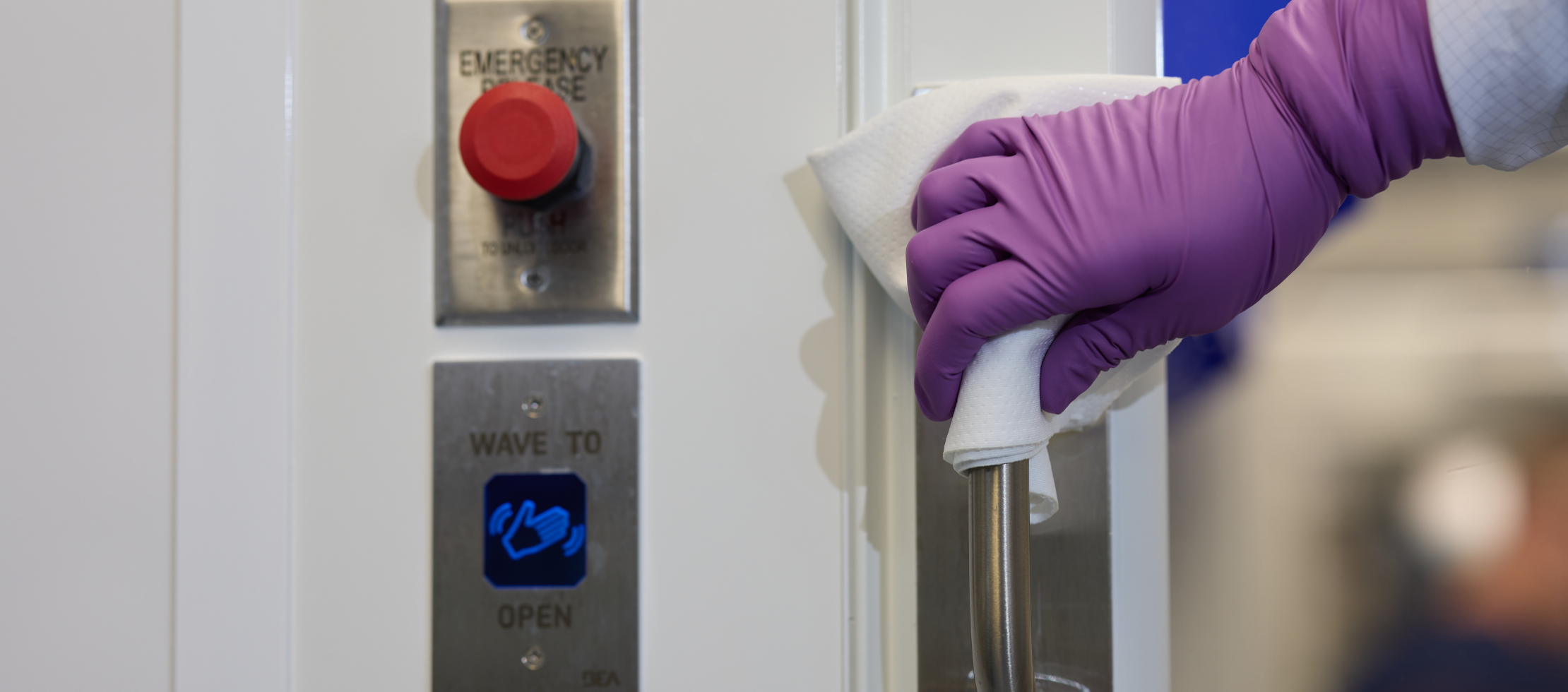
Selecting the correct cleanroom wipe is essential for maintaining contamination control in pharmaceutical and controlled environments. The article explains that wipe selection should consider factors such as particle and fiber release, absorbency, material compatibility, surface cleaning requirements, disinfectant use, and operational suitability to ensure effective cleaning and contamination prevention.
Why Is Cleanroom Wipe Selection Important?
Cleanroom wipes are a critical component of contamination control programs within pharmaceutical, biotechnology, medical device, and other controlled environments.
Cleanroom wipes are used for:
-
Surface cleaning
-
Disinfectant application
-
Spill control
-
Equipment wiping
-
Residue removal
Selecting the wrong wipe may increase contamination risks, reduce cleaning effectiveness, or introduce particles and fibers into critical environments.
How Are Cleanroom Wipes Different From Standard Wipes?
Cleanroom wipes are specifically designed for controlled environments and differ significantly from general industrial or household wipes.
Cleanroom wipes are engineered to minimize:
-
Particle generation
-
Fiber shedding
-
Extractables
-
Contamination transfer
Cleanroom wipes may also undergo specialized manufacturing, laundering, packaging, and sterilization processes to meet controlled environment requirements.
Which Factors Should Be Considered When Selecting Cleanroom Wipes?
There are several key factors facilities should evaluate when selecting wipes:
-
Material composition
-
Particle and fiber release
-
Absorbency
-
Sorptive capacity
-
Chemical compatibility
-
Sterility requirements
-
Surface type
-
Intended application
-
Cleanroom classification
Wipe selection should align with both contamination control needs and operational requirements.
What Materials Are Commonly Used in Cleanroom Wipes?
Several materials are commonly used in cleanroom wipes, including:
-
Polyester
-
Cellulose
-
Polypropylene
-
Microfiber blends
Different materials offer varying characteristics related to:
-
Absorbency
-
Durability
-
Particle generation
-
Chemical resistance
-
Surface cleaning performance
Material selection should reflect the specific cleaning task and cleanroom environment.
Why Are Particle and Fiber Control Important?
Particle and fiber control are critical in cleanroom environments because wipes can become a contamination source if poorly selected.
Excessive particle or fiber release may:
-
Contaminate products
-
Affect sensitive processes
-
Interfere with manufacturing
-
Increase environmental monitoring excursions
Cleanroom wipes are therefore designed and processed to minimize contamination contribution during use.
How Does Absorbency Affect Wipe Performance?
Absorbency plays an important role in wipe effectiveness.
Absorbency affects:
-
Liquid pickup
-
Spill management
-
Disinfectant application
-
Residue removal
-
Cleaning efficiency
Wipes must balance absorbency with controlled liquid release to ensure effective surface cleaning and disinfectant distribution. Highly absorbent materials may not always be ideal for every cleanroom application
What Role Does Disinfectant Compatibility Play in Wipe Selection?
Wipes are frequently used with disinfectants and cleaning agents, making chemical compatibility essential.
Incompatible wipe materials may:
-
Degrade during use
-
Shed particles or fibers
-
Affect disinfectant delivery
-
Reduce cleaning effectiveness
Facilities should ensure wipes are compatible with commonly used cleanroom disinfectants and solvents.
How Do Surface Types Influence Wipe Selection?
Different surfaces may require different wipe characteristics:
-
Surface texture
-
Surface sensitivity
-
Equipment design
-
Residue concerns
-
Cleaning method
Smooth surfaces, sensitive equipment, and critical processing areas may all require different wipe performance characteristics.
Why Are Sterile Wipes Important in Some Cleanrooms?
Sterile wipes are commonly used in aseptic and high-grade cleanroom environments. These wipes help reduce microbial contamination risks in critical processing areas.
Sterile wipe considerations may include:
-
Sterilization method
-
Packaging integrity
-
Sterility assurance
-
Ease of transfer into cleanrooms
Sterile wipes are particularly important in Grade A and Grade B pharmaceutical cleanroom environments.
What Operational Considerations Affect Wipe Selection?
Operational requirements also influence wipe selection decisions.
Cleanroom operators should consider:
-
Frequency of use
-
Cleaning procedures
-
Cost management
-
Waste generation
-
Ergonomics
-
Storage requirements
-
Packaging formats
Facilities should evaluate how wipes integrate into broader contamination control and operational workflows.
Conclusion
Selecting the appropriate cleanroom wipe is essential for maintaining contamination control, cleaning effectiveness, and operational efficiency in pharmaceutical and controlled environments. Facilities should evaluate material properties, particle control, absorbency, disinfectant compatibility, and cleanroom requirements to ensure wipes support validated cleaning processes.
Key Takeaways
-
Cleanroom wipes are specialized products designed to minimize contamination in controlled environments.
-
Wipe selection should consider particle control, absorbency, material compatibility, and intended application.
-
Different wipe materials offer different performance characteristics for cleanroom cleaning tasks.
-
Chemical compatibility with disinfectants and solvents is essential for effective wipe performance.
-
Sterile wipes are important for aseptic and high-grade pharmaceutical cleanrooms.
 return to overview
 back to top